-
A Tale of Three Takedown 22s
Out in the flatlands east of beyond, the shoots of green grass are shouldering through the stubble. Down in their dens, the Belding’s ground squirrels are astir. It won’t be long before sage rats are perched atop their mounds in the spring sunlight. There are a lot of ways to deal with this pest of…
-
Hunting Hares Without a Hound
The pines were planted in rows and trimmed up to chest height. To see for any distance we had to bend at the waist or kneel and peer ahead. We were on the edge of a hay field, about a quarter of a mile from fields of alfalfa and oats. Rabbit hunts are the same…
-
Gospel Hump Wilderness, Idaho
Steep is an understatement. The Salmon River (Idaho’s River of No Return) divides some of the most remote backcountry wilderness in the Lower 48. With elevation changes that take a hunter from 2100 feet above sea level to 4000, 6000, 8000 feet and beyond, the Salmon River gorge is the second deepest canyon in the…
-
Mearns’ Quail south of Tucson
South of Tucson, harsh mountains rise steep out of the arid desert plane. The Huachucas, Santa Ritas, Sierritas and other high desert ranges of the Coronado National Forest are home to Mearns’ quail, a long-toed scratcher of the tall grass, scrub oak and cactus uplands. Once thought to be extinct, the black and white and…
-
Black Bear on the Pacific Coast – Washington
Black bears occupy all the forest habitats of western Washington, the Cascade Mountains, the Okanogan, the Selkirk and Blue Mountain ranges. For management purposes, biologists divide the state into nine black bear management units (BBMUs). Based on computer modeling and reconstruction studies, the statewide population is thought to number between 25,000 and 30,000 animals.
-
Black Bear on the Pacific Coast – California
According to Senior Wildlife Biologist, Doug Updike, California’s black bear population has increased over the past 25 years. “In the last 30-plus years, we’ve seen a three-fold increase,” Updike said. Recent estimates put California’s bear population at about 30,000 animals spread over 52,000 square miles of habitat. Today, the state ranks among the top black…
-
Bushytails on the Barlow Trail
We turned off the pavement and onto a gravel road and then turned left on another road that wound through stands of pine and oak. Tree roots stuck out into the dirt track and we bumped along, headed west toward Mount Hood shrouded in the clouds. Before there was a Highway 26 that crossed the…
-
Found! A Drive-To Arctic Grayling Fishery
Alaska is a land of big rivers and big fish. So why would anyone bother to chase grayling in the spring when there are salmon in the river all summer? Because grayling are silver-sided denizens of deepest Alaska, with tall, sail-like dorsal fins and a propensity for popping dry flies. To me, they are the…
-
Rockchuck Hunts are Around the Corner
For big game practice on a small scale, head east of the Cascades and hunt rockchucks, also called yellow-bellied marmots, in and around agricultural land. Rockchucks populations, without grain and grass irrigated and cultivated by humans, do not grow out of balance. They live in small groups and are kept in check by hawks, coyotes,…
-
Briefly Noted: Redding, California
Most hunters think of Oregon or Washington when they think of blacktail deer, but from the ocean beaches inland to I-5 and beyond, California is home to large numbers of Odocoileus hemionus columbianus and mule deer/blacktail hybrids. California is divided into five main deer management zones. The pure coastal deer is found in the A-Zone…

Field Guide
Worldwide Hunting
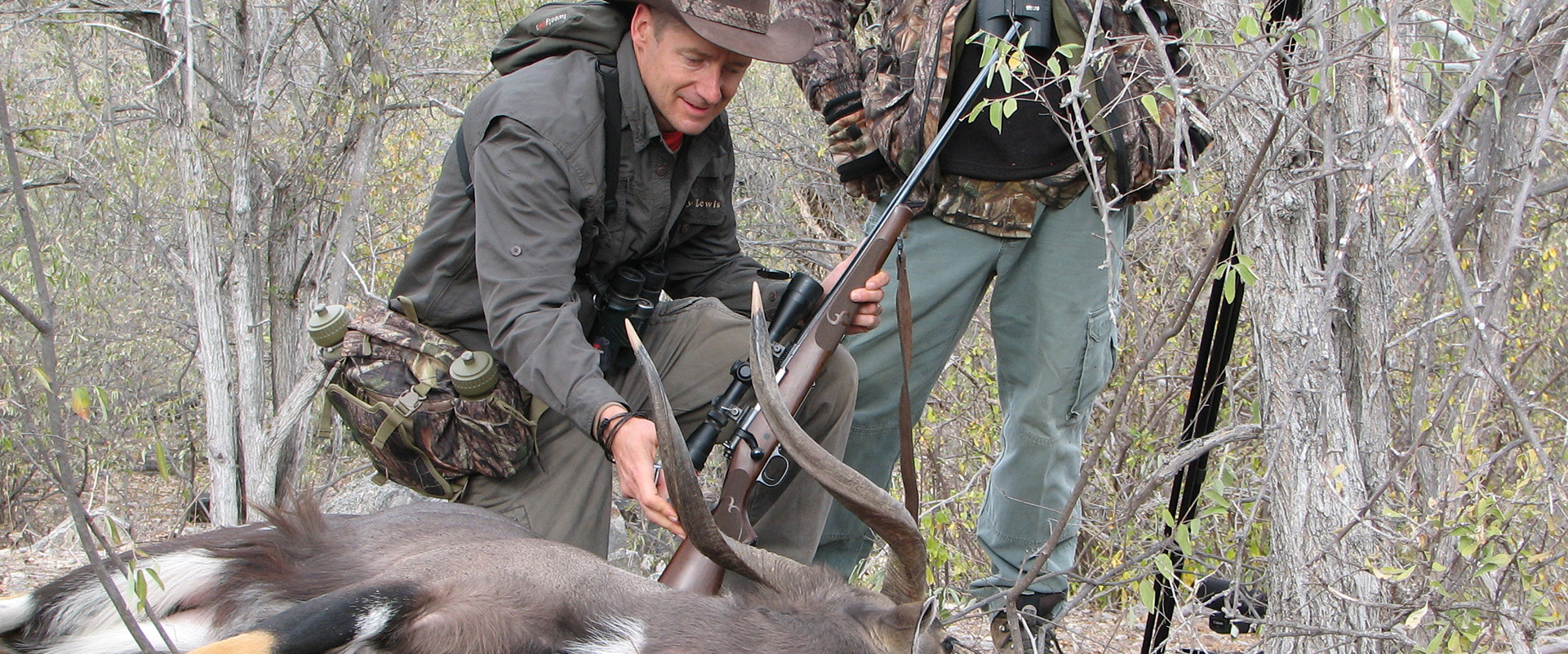
From Alaska to New Zealand and Hawaii to Africa, Gary’s hunting trips have brought him all over the globe. As a writer, Gary takes a pen and paper to every part of the world he’s been to, and he’s been able to record hunting experiences that bring you right into the action with him.
For hunting enthusiasts, this resource—hunting articles from all over the world—will be extremely helpful in planning your next trip! The article sections are listed below, to help you figure out where you want to visit on your hunting adventure.